If you are anything like me, you likely have a growing collection of beautiful yarn scraps tucked away that you just can’t bring yourself to throw away. I am so pleased to share the Leftover Baby Blanket, a pattern designed to turn those precious leftover bits and bobs into a stunning, one-of-a-kind mosaic blanket.
I myself have a few patterns I make that will help with some of the larger balls, such as preemie baby cardigans, blanket squares, or fingerless mittens for charity.
I also have a twiddlemuff pattern which is fantastic for using up the last bits of yarn, but not everyone has somewhere to send twiddlemuffs.
Baby blankets however are typically easier to find homes for, whether for family or friends, or a local charity.
So I want to share this free pattern with you to give you another tool in your kit for using up the last bits of yarn that might appear to be multiplying in your stash.
Blanket Guidelines
Yarn Weight
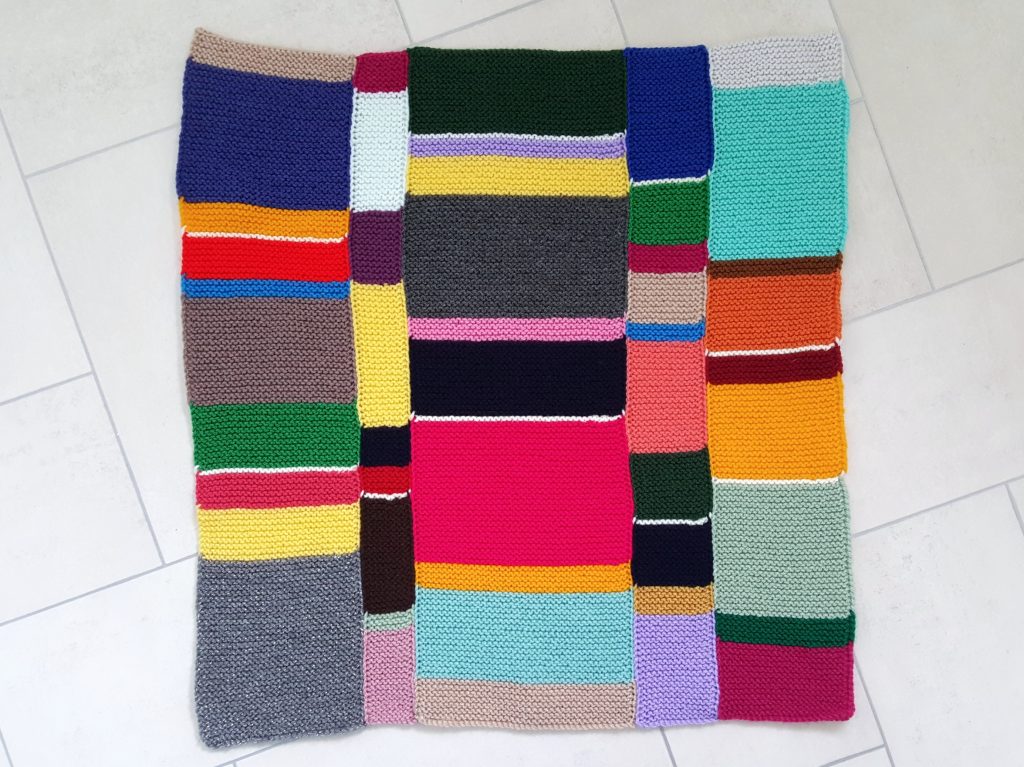
I recommend using the same yarn weight throughout the blanket. The sample shown uses standard DK weight yarns throughout and weighs 190g in total.
Needles
Choose a needle size that is suitable for the yarn weight you are using. For aran weight I’d recommend a 5mm needle. For DK I’d recommend a 4mm needle, which is what I used in the sample. For fingering weight yarn I’d recommend a 3mm needle, maybe a 3.5mm.
You needn’t worry about needing to use a long circular needle as the blanket is worked in short columns and later sewn together. Standard straight needles would suffice.
Blanket Size
The blanket sample shown is a suitable size for a baby blanket, coming out at 55cm x 60cm. However, you can make a larger blanket simply by knitting more columns and rows to suit your needs. For a list of the most common blanket sizes check out this post from The Snugglery.
Column Widths
I recommend adjusting the width of the columns to add variation and interest. But you can make them all the same width if you prefer. The sample shown was made using 5 columns, all of different widths.
Colour Changes
When knitting the rows you can knit the full ball of leftovers you have, or you can use up some of it, and use the rest of it later on in the same blanket. If you have larger sized balls I recommend using bits of it in different columns as this brings some cohesiveness to the finished blanket. For example the navy blue was a larger ball and I used it in three different columns.
When deciding to change colours another things I did was to lay the columns out on the floor and try to make sure most of my colour changes were not next to a colour change in the neighbouring column. This didn’t work in all instances, but it helps to add interest to the finished blanket.
You may also notice that in several places I have a thin row of white yarn. Colour changes can be as short or as long as you wish!
I also recommend finishing each colour block on a wrong side row. This gives you a crisp colour change.
Blanket Instructions
The blanket is first knitted in individual columns or strips of fabric. These columns are later sewn together to create the full blanket.
The sample shown uses:
– DK weight yarn
– 4.00mm needles
– 5 columns, one each of 30sts, 10sts, 40sts, 15sts, and 25sts
– 240 rows (this is 120 garter ridges) per column
Using a cable cast on, cast on for your first column.
Knit a total of 240 rows (this is the same as 120 garter ridges) changing colours as you go. I slip the first stitch of every row purlwise to create a neater edge for sewing up, but this is optional.
Cast off.
Repeat for the remaining columns.
Sew the columns together using your preferred method. The sample shown used mattress stitch.
Optional: Block your blanket if you want.
Weave in and trim the ends.
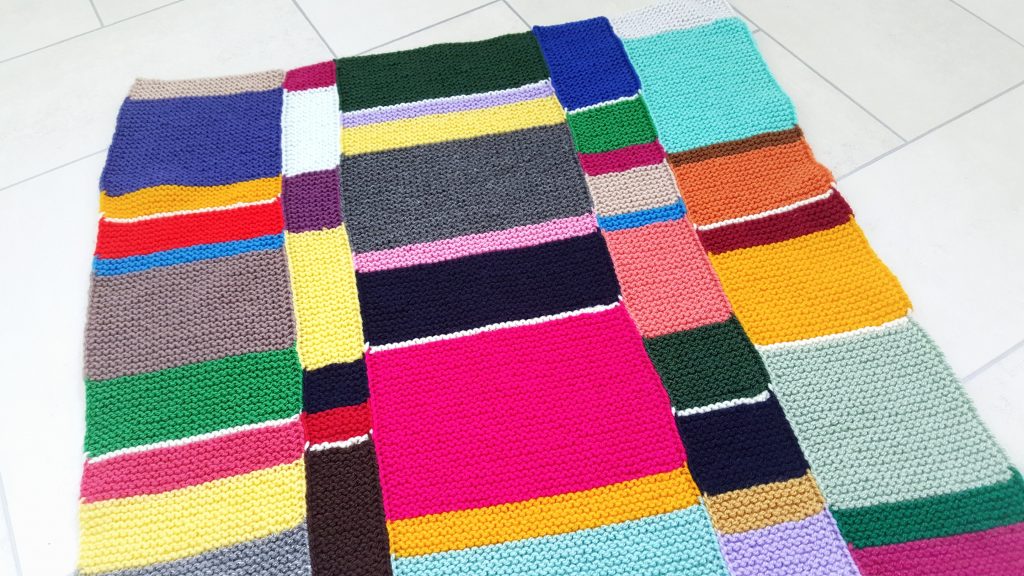
Enjoy using this pattern recipe and making good use of your leftovers!
Best wishes, – & happy crafting
Sam xox
0 Comments